
If you’re lucky enough to own a Victorian property in London, you may have discovered
original wooden floorboards hiding beneath old carpets or linoleum. Restoring these characterful boards can add
warmth, beauty and value to your home—but what’s really achievable when reviving a floor that’s seen a century or
more of use? As specialists in wooden
floor restoration, we’ll take an honest look at what’s possible when restoring Victorian floorboards and
what factors can limit the scope of the work.
The Potential Beauty of Restored Victorian Boards
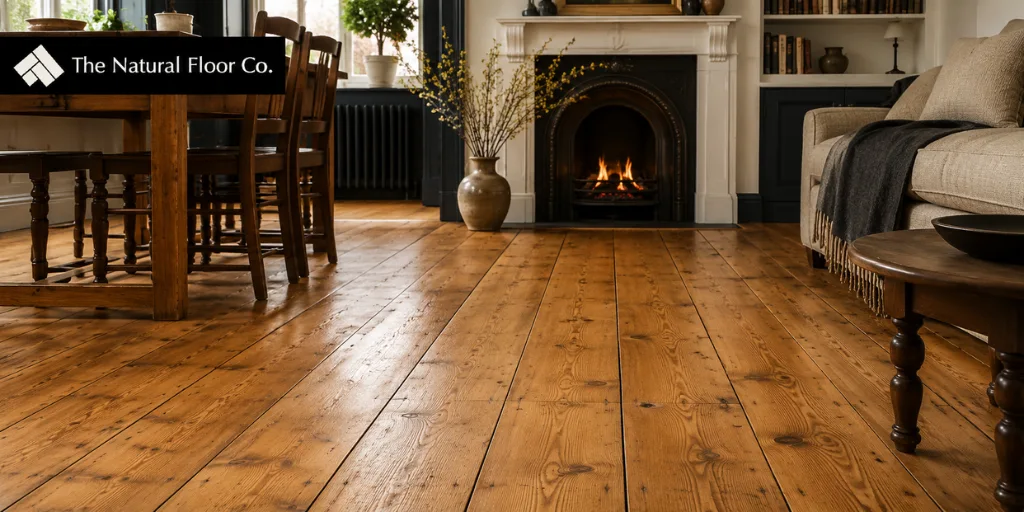
When original Victorian floorboards are in salvageable condition, careful restoration
can yield truly stunning results. Those wide, old-growth boards, laid with a craftsman’s hand, have a tightness of
grain and richness of patina that simply can’t be replicated in new wood. Sanding away decades of dirt, paint and
damage reveals the bare bones of the boards in all their character and beauty.
With localised repairs, gap filling, meticulous sanding and your choice of protective
natural oil, hardwax oil, lacquer or paint, restored Victorian boards can be one of the most striking original
features in a period London property. We’ve seen transformations that left homeowners speechless—from dark, gappy,
paint-splattered boards to a smooth, glowing expanse that begs to be walked on barefoot.
What’s Usually Achievable
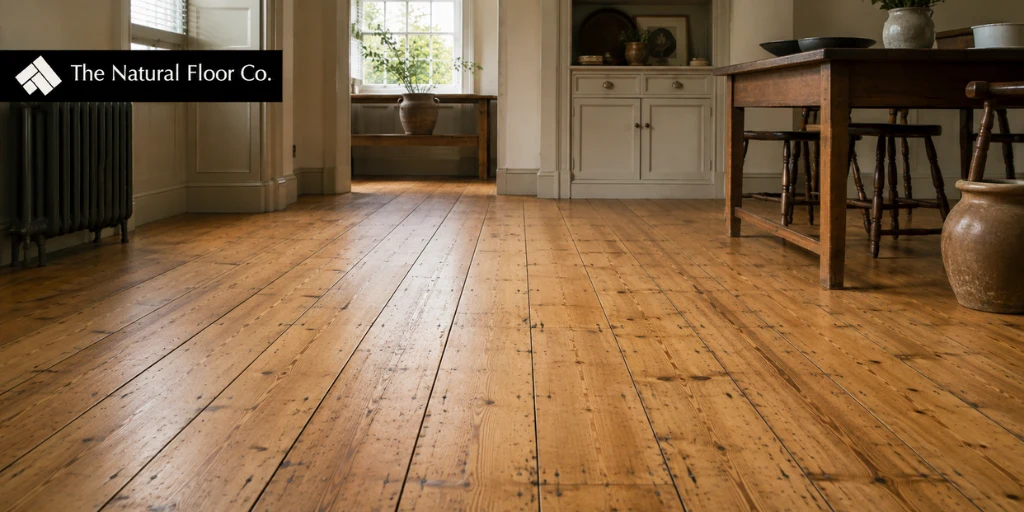
In the majority of Victorian and Edwardian houses we work on, where the original
floorboards are still in place and haven’t suffered severe damage, we’re able to achieve the following through our
restoration process:
✔ Repair localised damage. This may include fixing or replacing broken boards, securing
loose boards, and repairing old gaps around pipework or hearths.
✔ Sand away surface stains, paint and old finishes. Our dustless sanding equipment
removes the old surface to reveal the clean, fresh timber beneath, ready for a new finish.
✔ Fill gaps between boards. Victorian floorboards often have visible gaps that affect
both appearance and thermal efficiency. We can fill these with resin, strips or decorative filler for a neater look.
✔ Stain the boards. Staining can even out colour variations and enhance the wood’s
natural grain for a rich, consistent appearance.
✔ Apply your choice of finish. Natural oil, hardwax oil, lacquer and paint are all
possible, depending on the look and durability required.
The Limitations of Restoration
While there’s much we can achieve with a diligent repair and renovation process, there
are some common limitations to restoring original Victorian floorboards that are important to understand before
undertaking the work.
Visible History
One of the most frequent conversations we have with clients is about managing
expectations of the final result. Original Victorian boards are 150+ years old. They’ve been walked on, spilled on,
scratched, dented and patched over generations. And the timber itself, particularly pine, is softer than modern
hardwoods.
So while restoration absolutely transforms antique boards, it won’t make them look brand
new—and nor should it. Visible history is part of the unique character and appeal of a Victorian floor. Even after
filling, the ghost lines of old gaps will likely remain. And while sanding removes most surface marks, some deeper
stains can remain as a testament to the floor’s age.
Our approach is to embrace and enhance the inherent beauty of old boards while making
them structurally sound, more consistent in tone and protected for the future. But erasing all signs of their
history is neither possible nor desirable when restoring Victorian floorboards authentically.
Variations in Height
Height differences between individual floorboards are very common in Victorian houses.
Carpenters of the era were working by hand and eye, not the precise machine milling we see today, so boards can vary
in thickness.
Sanding greatly improves the overall flatness of an old floor, but getting it perfectly
level may not be feasible without sanding the boards down to a detrimental thinness. We usually recommend retaining
healthy wood depth and celebrating a floor’s subtle undulations as part of its handmade character.
Gaps Between Boards
Victorian floorboards were typically laid with a square-edge profile, not the
tongue-and-groove fitting that later became common. So gaps between boards are the norm, exacerbated by a century of
foot traffic and seasonal expansion and contraction.
We have various options for filling gaps, from resin and colour-matched fillers to
inserting slim slivers of timber. But even filled, the ghost lines of the gaps will likely remain visible. Wider
gaps over about 5-6mm may not be fillable without risk of the filler cracking out over time.
So while gap filling greatly neatens a Victorian floor’s appearance, it’s important to
understand that a fully flush, gap-free result is not always achievable. A more realistic goal is to minimise the
visual impact of gaps and improve thermal
insulation while retaining the natural subtle texture between boards.
Board Replacement
Individual boards that are rotted through, split, weakened by woodworm or damaged beyond
repair may need to be replaced to ensure a safe, structurally sound floor. In a very aged floor or a specific area
like a bathroom, kitchen or porch, the proportion of boards that need replacing can be higher.
We always strive to preserve as much original wood as possible, but there does come a
point where replacement is better than unsustainable repair. When we do need to introduce new boards, we source the
best possible match in type, width and grain, and use tactics like tinting, deliberate distressing and
hand-finishing to help new sit harmoniously with old.
The Restoration Process
If you’re considering restoring your London property’s original floorboards, the process
typically involves:
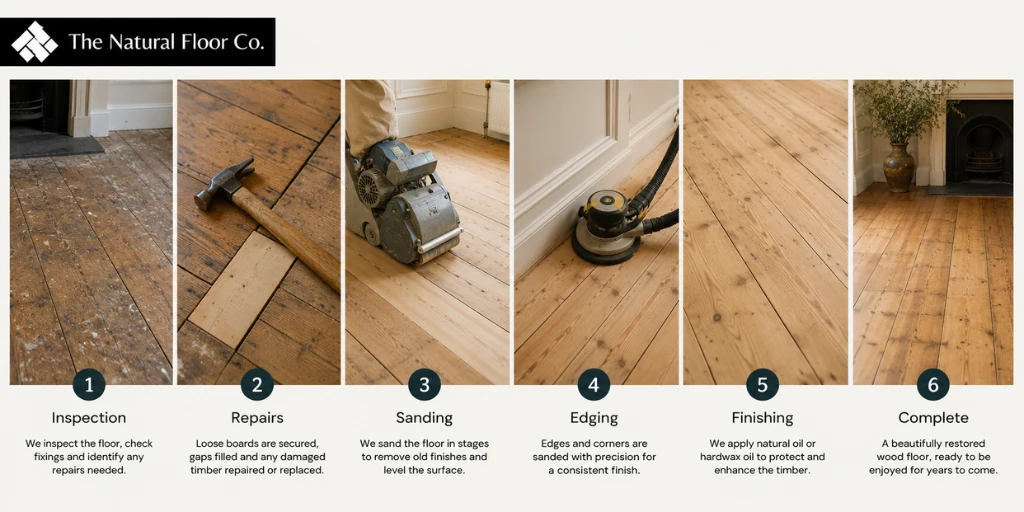
- Assessment. We’ll visit to examine the floor and discuss your goals. This is when we identify
any areas of damage, assess the overall condition of the boards and advise on feasibility. - Repairs. Damaged boards are repaired or replaced as needed, and old fixings like nails secured.
- Sanding. We use professional dustless sanding equipment to remove the old surface, smooth the
boards and reduce (but not eliminate) height variations. The sanding process is gradual, from coarse to fine
grits. - Gap filling. If desired, we’ll fill gaps between boards with your choice of filler,
colour-matched as closely as possible. - Staining (optional). We can apply wood stain to enhance and even out
the colour of the floor. - Finishing. To protect the newly restored floorboards, we apply your chosen finish, whether a
penetrating oil for a natural look, hardwax oil for added durability, lacquer for a smooth sheen or paint for a
solid colour.
The exact process will depend on the condition of your floor and the look you want to
achieve, but every stage is carried out with care, attention and respect for the historic wood.
Aftercare for Restored Victorian Floors
While Victorian floorboards have already proven their durability, a restored
floor will benefit from some simple aftercare
to keep it looking its best for many more years to come:
- Sweep, vacuum and damp-mop regularly to remove dust and debris
- Clean occasionally with a wood floor cleaner designed for your specific finish
- Avoid excessive water exposure and wipe up spills promptly
- Use felt pads on furniture feet and avoid rolling casters where possible
- Maintain a consistent humidity level to minimise seasonal expansion/contraction
- Apply a fresh coat of oil or lacquer every few years as needed to refresh the finish
With a little ongoing TLC, your restored Victorian floorboards will be a characterful,
hardwearing feature to enjoy for decades to come.
Is It Worth Restoring Original Victorian
Floorboards?
In the vast majority of cases, we believe restoring original floorboards is well worth
doing if they’re still in salvageable condition. Not only does restoration create a beautiful, historically
significant feature, it also avoids the monetary and environmental cost of replacing the entire floor.
Original boards have an irreplicable beauty that only comes with time—the tight grain of
old-growth wood, the subtle texture of a century of footsteps, the visible record of lives lived. To sand away the
old surface and reveal that characterful wood in a form that’s clean, smooth and ready for a fresh chapter is a
uniquely gratifying process as flooring specialists.
Yes, there are limitations—restored boards won’t look brand new and some signs of their
age are inevitable. But those authentic imperfections are a big part of the appeal for lovers of period character.
The key is to enter the restoration process with realistic expectations, a commitment to
preserving as much original material as possible, and an appreciation for the history and heritage of these
remarkable floors. Because when all’s sanded and done, you’ll have a true showpiece that’s the heart and soul of
your London home.
Ready to Explore Restoring Your Victorian
Floorboards?
If you’re intrigued by the possibility of reviving your home’s original boards, we’d
love to take a look and talk through the potential of your particular floor.
At The Natural Floor Co., we’ve been restoring original Victorian and Edwardian
floorboards across London for over 30 years. We combine deep expertise, a passion for period character and the
latest dustless sanding technology to bring antique floors back to beautiful life.
For a free, no-obligation quote and expert assessment of your floor’s potential, just
get in touch. Request your quote online or give us a
call on 020 8830 1455—we’re always happy to discuss the possibilities.