

Acoustic Floor Insulation: Reducing Noise Through Timber Floors
Timber floors are a common feature in London homes, particularly Victorian and Edwardian properties, period terraces and converted flats. Although wooden flooring adds character and warmth, it can also allow unwanted noise to travel between rooms and storeys.
Footsteps, conversations, televisions and moving furniture can all create disturbances when timber floors have insufficient acoustic protection. Gaps between floorboards and uninsulated cavities can contribute to sound transmission.
Acoustic floor insulation helps reduce noise travelling through timber floors, improving comfort and privacy within a property.
In this guide, The Natural Floor Co. explains how sound travels through wooden floors, the different insulation methods available and what London homeowners should consider before arranging acoustic insulation work.
What Is Acoustic Floor Insulation?
Acoustic floor insulation involves installing materials or floor systems designed to reduce sound transmission between different areas of a building.
In traditional suspended timber floors, acoustic insulation can be fitted between wooden joists to help absorb airborne sound.
Depending on the property and the type of noise, additional measures such as resilient acoustic layers and suitable sealing may also be necessary.
There are two main types of noise to consider:
- Airborne noise: Conversations, televisions, music and other sounds travelling through the air.
- Impact noise: Footsteps, dropped objects and furniture movement that create vibrations within the floor structure.
Understanding the difference is important because different acoustic treatments address different noise problems.
Why Do Timber Floors Allow Noise to Travel?
Traditional timber floors often consist of wooden floorboards supported by timber joists, with an empty cavity beneath.
In many older London properties, these cavities were constructed without modern acoustic insulation.
Several factors can contribute to noise transmission.
1. Gaps Between Wooden Floorboards
Older floorboards can develop gaps due to natural timber movement, wear and previous alterations. These openings may allow airborne sound to pass between rooms and floors.
2. Uninsulated Floor Cavities
Empty spaces between floor joists can contribute to sound transmission. Installing suitable acoustic insulation can help reduce airborne noise travelling through the floor assembly.
3. Structural Vibrations
Walking across wooden flooring can cause vibrations to travel through floorboards, joists and connected building elements.
4. Poorly Sealed Openings
Gaps around pipes, electrical cables and floor edges can provide additional routes for airborne noise.
5. Direct Contact Between Flooring Materials
Rigid connections between floor coverings and structural components can transfer impact vibrations throughout the building.
How Does Acoustic Floor Insulation Work?
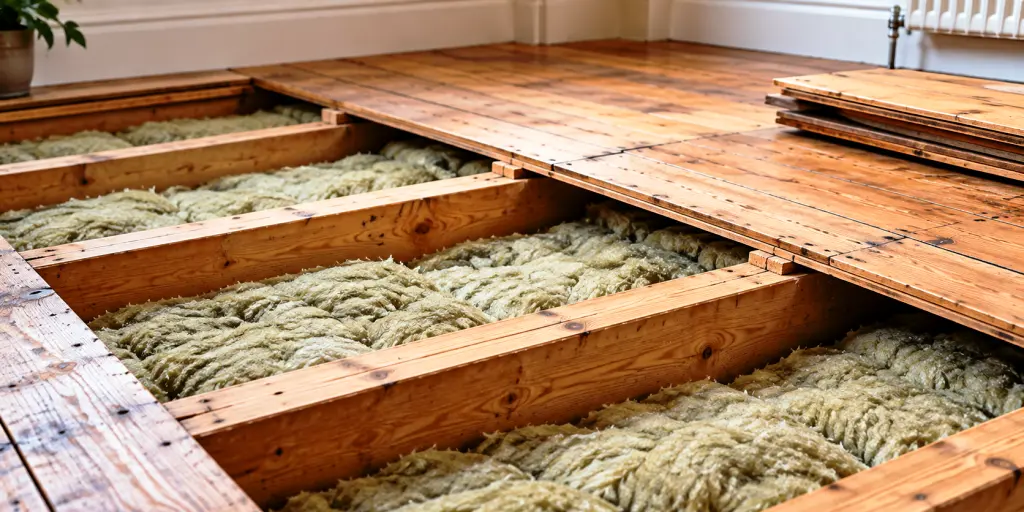
Effective acoustic insulation generally relies on three principles: sound absorption, separation and airtightness.
Sound absorption: Suitable insulation materials absorb some sound energy within the floor cavity, helping reduce airborne noise transmission.
Separation: Resilient acoustic components can help reduce the direct transfer of vibrations between connected surfaces.
Airtightness: Appropriate sealing around gaps and penetrations helps limit airborne sound leakage.
For many timber floors, combining suitable treatments can provide better acoustic performance than relying on a single material.
Types of Acoustic Insulation for Timber Floors
1. Acoustic Mineral Wool Between Floor Joists
Acoustic mineral wool is commonly installed between timber joists to improve sound absorption within floor cavities.
It is particularly useful for addressing airborne noise and can form part of a wider acoustic floor improvement.
Benefits include:
- Helps reduce airborne sound transmission.
- Can be installed within accessible timber floor cavities.
- Can be combined with other acoustic treatments.
- May allow original floorboards to be retained.
The material must be appropriately specified and fitted to suit the available cavity space.
2. Acoustic Underlay for Wooden Floors
Acoustic underlay is a resilient material installed beneath a compatible floor covering.
It can help reduce impact noise caused by footsteps and movement across the floor.
However, the suitability of acoustic underlay depends on the flooring type, installation method and acoustic requirements.
3. Resilient Acoustic Layers
Resilient acoustic layers are designed to reduce vibration transmission between connected flooring components.
They may be incorporated into specialist acoustic flooring systems where impact noise is a particular concern.
Correct installation is essential because rigid connections can reduce their effectiveness.
4. Acoustic Sealing Around Floor Openings
Even when insulation is installed between joists, gaps around service penetrations and floor edges can allow airborne sound to travel.
Suitable acoustic sealing can help reduce these sound paths.
Care must be taken to maintain necessary ventilation and comply with relevant fire safety requirements.
5. Combined Acoustic Floor Systems
Some properties require more than cavity insulation alone.
A combined system may incorporate acoustic mineral wool, resilient components, additional mass and appropriate sealing.
The most suitable approach depends on the existing floor structure, available floor height and the type of noise being addressed.
How Is Acoustic Floor Insulation Installed in Existing Timber Floors?
The installation process depends on the existing flooring construction, accessibility and condition of the timber.
For suitable traditional floorboards, the process may involve the following stages.
Step 1: Inspect the Existing Timber Floor
The floorboards, joists, cavity depth and general condition are assessed before work begins.
This helps determine whether acoustic insulation can be installed without extensive alterations.
Step 2: Carefully Lift Selected Floorboards
Where suitable, selected floorboards are lifted to provide access to the cavity beneath.
The Natural Floor Co.’s published approach describes lifting approximately every fifth or sixth floorboard where practical.
Step 3: Prepare the Acoustic Insulation
Suitable acoustic insulation is measured and cut to fit the available spaces between timber joists.
Step 4: Install Insulation Between the Joists
The insulation is carefully positioned within the floor cavity, with consideration given to existing pipes, electrical cables and other building services.
Step 5: Refit the Wooden Floorboards
Once the insulation is installed, the lifted floorboards are carefully refitted and secured.
Any damaged or unsuitable boards may require additional repairs.
Step 6: Consider Floor Sanding and Restoration
Where appropriate, the floor may also benefit from professional sanding, repairs and refinishing.
Dust-controlled sanding equipment can help manage airborne dust during restoration.
Acoustic Floor Insulation for Victorian and Edwardian Properties in London
Many Victorian and Edwardian houses in London contain suspended timber floors that were constructed before modern acoustic performance requirements became common.
When these properties are converted into flats, noise travelling between floors can become particularly noticeable.
Residents may hear conversations, television noise and everyday activities from neighbouring rooms or properties.
Installing acoustic insulation within accessible joist cavities may help reduce airborne sound transmission while retaining suitable original timber floorboards.
However, older buildings require careful consideration of:
- The condition of existing timber joists and floorboards.
- Subfloor ventilation and moisture management.
- Existing electrical cables and pipework.
- Fire separation requirements.
- Leasehold restrictions and building regulations.
- Any listed building or conservation requirements.
A professional assessment helps determine the most appropriate approach.
Can Acoustic Insulation Reduce Footstep Noise?
Acoustic insulation installed between timber joists is primarily intended to reduce airborne noise.
Footsteps create impact vibrations that can travel directly through the floor structure.
Although cavity insulation may form part of a broader acoustic upgrade, it should not be treated as a complete solution for significant impact noise.
Reducing footstep noise may require specialist resilient flooring systems or additional structural treatments.
Homeowners should identify the main source of noise before choosing an insulation method.
Can Acoustic Insulation Be Combined with Wooden Floor Restoration?
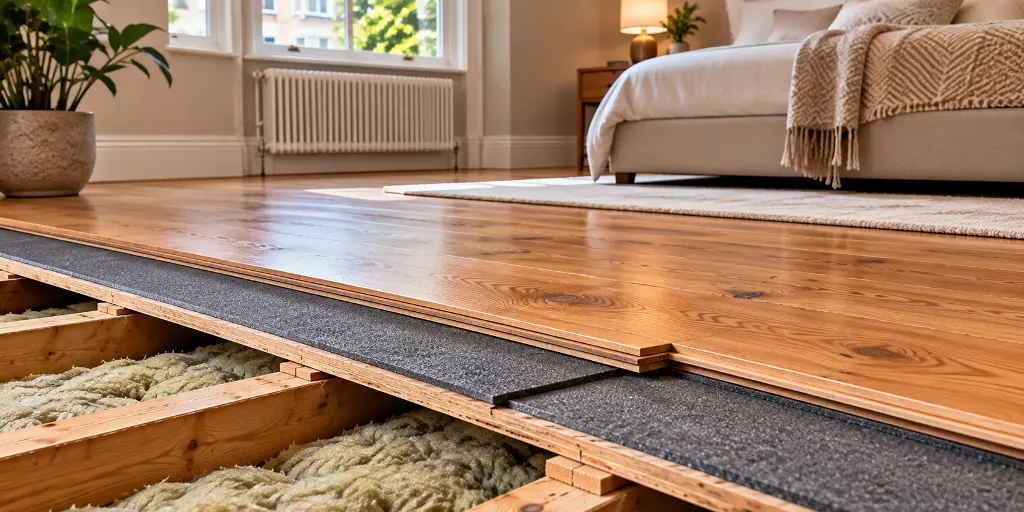
Yes. Acoustic insulation can be considered alongside a planned wooden floor refurbishment.
Where suitable, the work may be coordinated with:
- Wooden floorboard repairs.
- Replacement of damaged timber boards.
- Securing loose floorboards.
- Appropriate gap filling.
- Professional floor sanding.
- Wood staining and refinishing.
- Protective floor sealing.
Combining suitable restoration and insulation work can reduce the need to disturb existing floorboards on separate occasions.
Learn more about our wooden floor restoration services in London.
Acoustic Floor Insulation vs Thermal Floor Insulation
Acoustic and thermal insulation may both involve installing materials beneath timber floors, but their main purposes are different.
Acoustic Floor Insulation
Acoustic insulation focuses on reducing sound transmission through floors.
It is particularly relevant where airborne noise travels between rooms, storeys or neighbouring properties.
Thermal Floor Insulation
Thermal insulation focuses on reducing heat loss through the floor structure.
It is particularly relevant for suspended ground floors where cold air and draughts can affect indoor comfort.
Some materials offer both acoustic and thermal properties, but the installation system should be specified for the intended purpose.
If cold floors are your main concern, explore our thermal floor insulation services in London.
How Much Does Acoustic Floor Insulation Cost in London?
The cost of acoustic floor insulation depends on several factors, including:
- The total floor area.
- The type and condition of existing floorboards.
- Accessibility beneath the timber flooring.
- The depth and layout of the joist cavities.
- The insulation materials required.
- Any additional floorboard repairs.
- Whether sanding or refinishing is also requested.
The Natural Floor Co.’s published price list includes a rate from £30 per m² for acoustic insulation with Knauf acoustic roll.
This is an indicative starting price, subject to assessment and confirmation of the required work.
For an accurate quotation, the existing floor construction and project requirements should be assessed.
Benefits of Acoustic Floor Insulation
Improved Comfort
Reducing unwanted airborne noise can make living spaces more comfortable.
Better Privacy
Acoustic insulation can help limit conversations and other airborne sounds travelling between floors.
Retaining Original Timber Flooring
In suitable properties, insulation can be installed while preserving existing wooden floorboards.
Suitable for Period Properties
Traditional suspended timber floors may provide accessible cavities for acoustic insulation, subject to assessment.
Opportunity for Floor Restoration
Insulation work can sometimes be coordinated with wooden floor repairs, sanding and refinishing.